Solstice thoughts (where everything is either horrendous or hilarious depending on your POV)

Blimey. It’s been a while. To be fair, I have been writing a dissertation, doing an actual ‘proper’ job, and hosting a podcast. These all require a significant amount of neurodivergent/creative bandwith. All good, creative, purposeful things.

photo taken while I was still feeling hopeful!

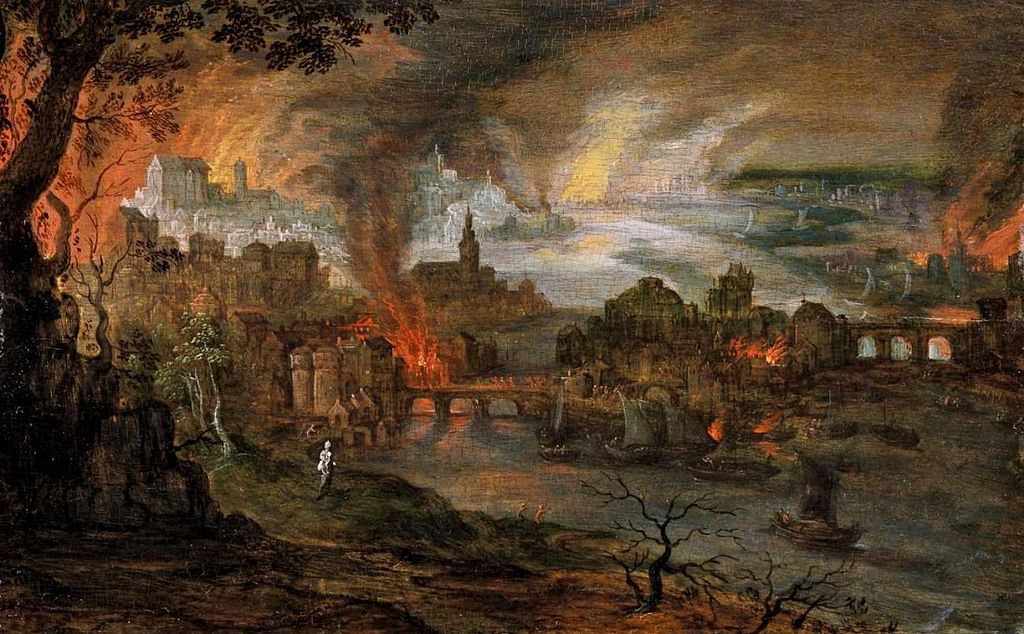
Into the mix, however, is a broken collarbone which has YET TO BE FIXED because of two (two!!) cancelled surgeries. The first one was cancelled when I was in the hospital, already wearing the surgical gown and DVT socks, and with an arrow sharpied onto my left shoulder. This might have been hilarious if it wasn’t after six months of waiting. Then there was the 18 hours of fasting and working myself up into enough of a lather to actually be able to go to the hospital in the first place! What is everyday to the people who fix collarbones, is a really big deal to those of us who need them fixed. And some of us have brains that don’t do these sorts of things very easily.

The second cancellation – just this Monday past – rather tipped me over the edge. Today is Wednesday. I am still over the edge. And since I am already over the edge, why don’t we add having no running water into the joyful blend of Solstice cheer and Christmas preparations? Yes, why not?

Let them drink… sweet sherry and prosecco!

The thing is… these things are happening to me, and I could – quite legitimately – feel personally aggrieved. Which, I do. But I am utterly, seethingly livid about the bigger picture. Yes, it’s personal, but the personal – as my feminist forebears taught us – is political.

Friends, let me present to you: The English health service. And the English water network.

The NHS because of – God – where do we even start? Yes, I am anxious and stressed and still in pain because my operation got cancelled. But it got cancelled because staff called in sick. There is not even a nanometre of leeway in the NHS to accommodate that. Chronic staff shortages, underfunding, Brexit, and a (Not even very covert) push towards privatisation have all taken a massive toll. It is on its knees. And people wonder why nurses are striking?

Not even the USA has private water, that’s how bad it is!

And the water! My God the water. England and Wales have a privatised water supply and networks. This is monopolized (quite legally btw) by a few companies who fail to invest in infrastructure so that rainfall causes flooding, burst water mains cause havoc (and NO RUNNING WATER FOR CHRISTMAS) and raw sewage is constantly released into our rivers and seas!

If I am pissed off about my own personal circumstances, it pales in comparison to the level of seething rage I feel at the immoral erosion of these two fundamental basic human rights.

Things really are a bit crap. Let’s not pretend they’re not.

And tonight is the Solstice, and I came on here to write something spiritual and hopeful and, well here it is! We can laugh about that surely? There comes a point – when everything is just a bit shite – when all there is left to do is acknowledge it, maybe indulge in a bit of dark humour, and surrender all and any control we imagined we had. This does not mean giving up the fight, only that there are fighting days, and there are surrendering days. There are times for rolling up our sleeves and doing everything we can to make things better, and there are times for filling a hot water bottle (perhaps with boiled rainwater!) and hiding under a blanket.

So into this longest, darkest night of the year, I offer this meditation:

Everything is a little bit shite, and that’s OK. Joy and Peace and Love and Hope still exist.

And a Blessing:

May you feel the deep Peace of Winter’s stillness; the cocoon of Love that surrounds you in the darkness; the joy that bubbles up from the depths of your soul; and the Hope that lies in something bigger than all of this, and all of us.

Sending Love and Peace and Hope and Joy out into the ether for all of you who are tending anything painful this Solstice.

Jude xxx

Saying Nothing is an Option

The other night my partner and I went OUT ( I know!) to see the glorious Hannah Gadsby at the Brighton Dome. I am going to attempt to paraphrase something she said,

“There are some people who seem to be under the false impression that saying nothing isn’t an option.”

She was, of course, referring to the plethora of opinions and hot-takes on social media that have recently pivoted from matters Covid, to the current conflict in Ukraine.

Before I go any further, I should point out that, utterly bereft of any qualification to comment on the complex geopolitics of the region, my ‘opinion’ is that war – any war – is an appalling offense to our humanity.

Already the conspiracy theorists who were spouting nonsense about the pandemic have started doing the same outrageous mis/disinformation number on Ukraine.

Plus ça change.

But here’s the thing. And I am talking to myself really. Saying nothing really is an option. I am betraying my own assertion by writing this, of course, but this is more of an observation of the tension that I feel, the pressure of our social media landscape in feeling that I have to visibly, vocally, state a position on everything. As if saying something serves in the place of actually doing something, and assuages the social guilt and pressure of saying/doing/thinking the ‘right’ thing, or taking the ‘right’ side.

My grandfather wrote a poem about Remembrance Day, although the same sentiment can be applied here, he said,

…is not about remembering It is being seen remembering, which is not the same, especially when formality sets in, and ceremony rates the display more important than the remembering.

I am sure grandpa will not be too concerned at my segue from his words to words from the Bible. Atheist as he was, he was deeply spiritual and had several versions (and many other religious and philosophical texts) on his bookshelves. These words speak deeply and viscerally into the heart of what I am making my practice right now.

So when you give to the needy, do not announce it with trumpets […] But when you give to the needy, do not let your left hand know what your right hand is doing, so that your giving may be in secret. Then your Father, who sees what is done in secret, will reward you.

Matthew 6: 2-4

That bit about announcing it with trumpets always cracks me up, because they clearly had the same bullshit going on in first-century Palestine.

As I said Plus ça change.

This is not to discount the importance and power of sharing our collective pain. Seeking solace and comfort in community is deeply important, as is offering out those places of refuge and safety for those who are suffering. We each have our own expression of this, our ways of ‘doing something’. The point is, I suppose, that whatever we are doing, and however we are responding, it is not compulsory to tell everyone.

Saying nothing IS an option.

The Day When Things Can Start

I have been resisting… or waiting… the waiting feels like something sacred. Maybe because it is. It is the first of February. In my body’s calendar, this is the date I have been waiting for. It is when things can start. The crows – who caw noisily from the trees behind me – know, too. They are telling each other, and me, and anyone else who will listen – it is time to shift these winter bones.

Other calendars agree with me (and the crows) It is also the Lunar (Chinese, Tibetan, East Asian) New Year. And in the Celtic Calendar – that guides my own heart – the beginning of Imbolc, Saint Brigid’s Day, and the (sort of) end of winter. Tomorrow is the Christian feast of Candlemas: an ending – of the season of Epiphany; and a beginning – of ‘Ordinary’ time (before the Lenten fast makes it special all over again)

If I was a conspiracy theorist (and I am not) I might imagine it to be some sort of test: who can override their internal body clock enough to ‘succeed’ in the system?

Imbolc sends impulses to my dormant winter cells throughout January, simultaneously poking me to wake up…and urging me to wait. My yearly last-minute tax return – filed just in time for the Jan 31st deadline – shouldn’t be a surprise by now. Nor should it be a source of personal beratement. If I was a conspiracy theorist (and I am not) I might imagine it to be some sort of test: who can override their internal body clock enough to ‘succeed’ in the system?

In the deeper sense of the word, it is a ‘conspiracy’, in that it is something that we all tacitly, collectively, culturally, agree to go along with.

Con Spirare: To breathe together; To agree. 

We are compelled to imagine ourselves to be something other than organisms that respond to light and dark and seasonal shifts. Just as do the crows, and the trees that they call from, and the snowdrops just beginning to poke their heads from the soil beneath. When the snowdrops come then we know for sure that Spring is coming too. Sometimes, the snowdrops are ‘early’ and sometimes they are ‘late’. Stately homes and gardens advertise their displays well in advance, knowing that the flowers will surely appear, but not entirely certain that they will do so on the ‘right’ date.

The inner knowledge that there is a time to step back into the world speaks from deep down as ‘not now’.

Waiting is inner, seasonal wisdom. It is sometimes – but not always- calendrical. There is, for the snowdrops, and the crows, a ‘right’ moment. A knowing. For me, waiting – or rather the resistance of it – shows up as procrastination, as exhaustion, as doubt. Sometimes as fear. The inner knowledge that there is a time to step back into the world speaks from deep down as ‘not now’.

These past two winters have allowed me to practice sinking into this ‘not nowness’ rather than struggling to understand, forcing myself to analyse it, or trying to overcome it. What has happened is that the moment of ‘yes, now’ is much more apparent than it ever has been before.

Although you could have been reading this yesterday, or tomorrow. For me, today is when Things Can Start.

With every blessing for Imbolc, for the Lunar New Year, for Saint Brigid’s Day, and (tomorrow) for Candlemas

Jude xxx

Does this mean I am not a failure…?

A while ago, I joked online about feeling a failure because I don’t ( and won’t) go cold water swimming, and I don’t have a Podcast. I rather consigned these – along with the trends of ‘radical self-care and the ‘digital detox’ – to the ‘things I don’t do – let’s leave that to the influencers’ corner. Meanwhile, I focused on being consistent in at least one thing – my utter lack of self- promotion.

I should note, this is despite having a book published in April. I can rather rise to the challenge of creating the odd Instagram story ( still not entirely sure why or what they are for) as long as the creative process of doing so interests me enough to bother. If I can divorce me enough from the process, then I might not die from the exposure.

Which is why a moment’s inspiration last week took me very much by surprise. I woke up one morning knowing that I was going to record a podcast, knowing what it was going to be about, and knowing what it was going to be called.

I swear, it just appeared, fully formed, in my awareness. And God, how I wish that the creative process was always like that! There’s more to it though. My podcast is called FKD UP BY FAITH. In it, I have conversations with people about how they’ve been fucked up by their faith, and (more importantly) how they have found hope, healing, reconciliation and forgiveness.

Within a week of having the idea, I had recorded and published the first episode – with my dear friend Roger Wolsey. At the end of our conversation, he said ‘ you might not see it this way, but this is ministry’. And he put his finger on something that I had sort of realised, but not quite. That this isn’t just about fulfilling my creative urge, it’s about fulfilling my ministry.

It is my ministry.

That thing arriving fully formed, fully created. A gift from the one who inspires us all, if we are inclined to listen. Like all my God-given gifts, I have a feeling that some people are not going to like it. Whilst the spelling FKD is an important adjustment for algorithms and delicate sensibilities, using the F word in the same sentence as the other F word (faith) might bother some folks.

In many ways though, this is probably a good indicator that this is exactly what I should be doing. If I didn’t swear, I wouldn’t be me. I would be denying myself, and my background. This is the thing about inclusivity. Do we accept people as they are… or do we want them to shave the edges off their class and their culture, as well as all the other identities that religion has told (and continues to tell) people they can’t be?

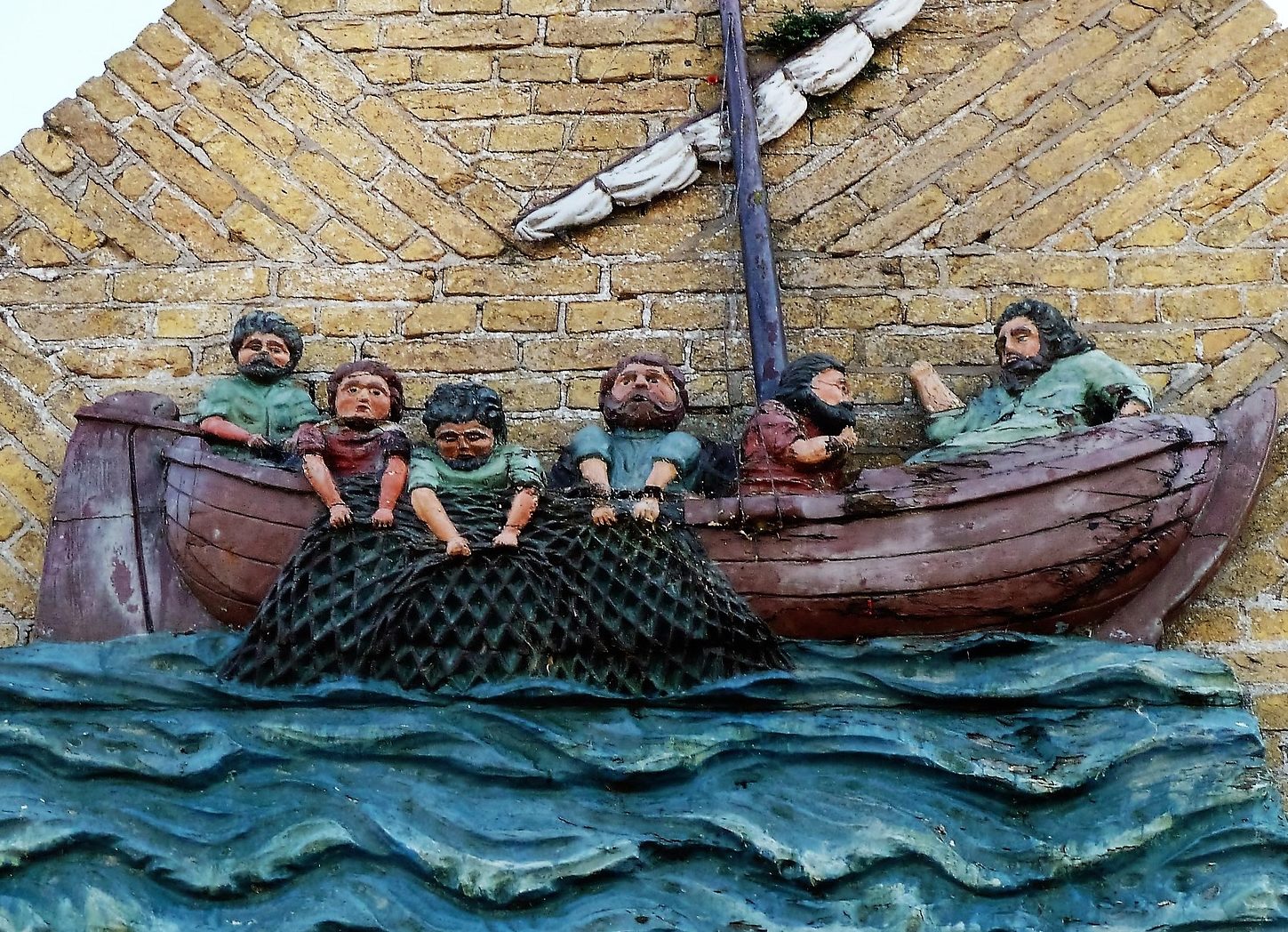
And do you know what else? Jesus hung around with sailors! Have you ever hung around with sailors? I think we can pretty much guarantee that Jesus heard more than the odd F-bomb ( or first-century Palestinian version thereof) and he never mentioned it.

Themes Biblical, Compassion and Zero Tolerance

I am lying, awake, irritated by the sound of the neighbour’s central heating exhaust and worrisome thoughts about the ‘biosecurity’ of our ducks’ pen. (As if things weren’t bad enough, Avian Flu is on the march as well) I have been reading a book for my Theology course which tackles the morally ‘problematic’ texts of the Old Testament, the bits that seemingly advocate violence, rape, slavery, homophobia, genocide… One suggestion, and I suppose an accepted understanding, is that things are better than then. That we have somehow evolved to be more morally mature.

I am not so sure.

It’s not just central heating and ducks that are keeping me awake. The escalating rise of Covid infections; the health service (that I work for) on the brink of overwhelm; an attempted fascist coup in the United States; the many unfolding ramifications of the shit show that is Brexit, as well as all the other global atrocities, such as the ongoing crisis in Yemen. Plague, war, division, exile, genocide: these themes are – quite literally – Biblical. Not to mention misogyny, homophobia and racism, it’s all still there. Human beings have never really stopped inciting or exacerbating this crap.

Of course, it wasn’t God doing all those things in the Old Testament, it was human beings! God was the justification, or at least the way in which they made sense of it all. And it is human beings who continue to behave the most jaw-droppingly appalling ways. Sadly God is – for many of them – still the justification.

If God was the kind of God they seem to think God is (and I don’t believe in that God) I think God would be rather pissed off.

Violence done in the name of God is a common atheistic argument against religion. And I see the point. Except for all the ways in which religious people (many more than those who commit violence) promote peace, love and unity in the name or practice of their faith. Human beings also behave appallingly in the name of other things that are not religion. Violence is about people. As we are seeing in the USA at the moment, God has been invoked in ways that many people of faith find deeply disturbing and offensive. And it’s not OK.

I said today on a social media post that neutrality is no longer an option. I was talking about the unspoken but generally accepted rule that religious leaders should stay away from the subject of politics. Particularly those who preach. This is in the week following an insurrection in which people were visibly and prominently wearing and carrying emblems and insignia that glorify white supremacy, antisemitism and genocide. That isn’t politics, it’s immorality. And if there’s one thing that religious leaders are qualified to comment on, it’s morality. I have been heartened to see many taking a stand on this. Calling for more than unity, namely: action; accountability; and zero tolerance of the kind of bigotry and hatred that history has taught us does not end well for anyone.

In truth, the Bible has many more passages in its entirety that promote the themes of liberation and social justice, as well as love, hope, faith and unity, than the other more troublesome parts. Taken as a whole, it gives a lot of hope for humanity. Love and compassion are the overriding themes of most faiths, because, despite our worst behaviours, love and compassion are also the overriding instincts of human beings for one another. Hope is possible because we know this is what we are capable of, and what most of us actually want and value.

Love, Compassion, Unity, Hope. Yes, but does this mean tolerating fascists? Most definitely not.

“Our lives begin to end the day we become silent about things that matter.”

Dr. Martin Luther King Jnr.

The Magi and the ‘bad’ year

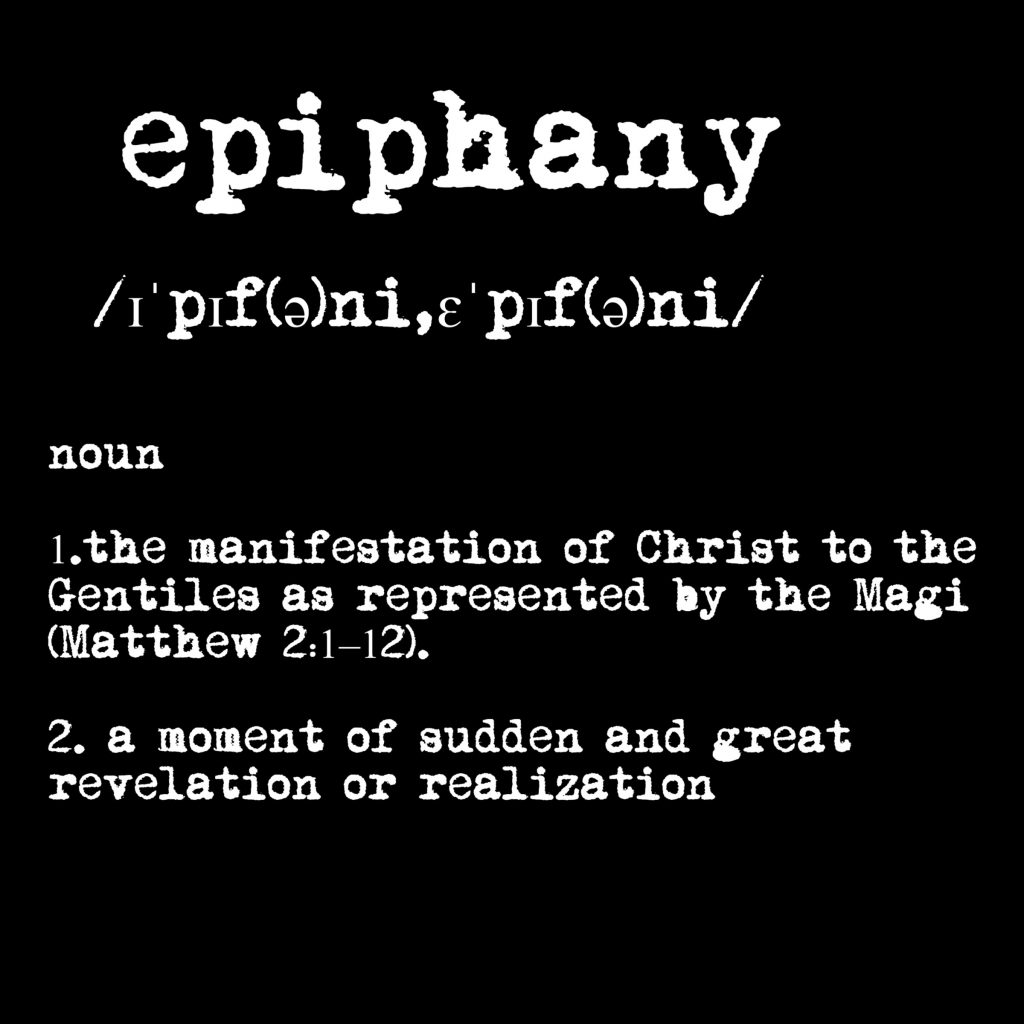
Today is Epiphany, The date when Christians in the Western Church celebrate the arrival of the Magi, and with them the manifestation and revelation of The Christ – the Light of the World – to the whole world. Who doesn’t know and love that story of ‘wise men’ and their gifts of Gold, Frankincense and Myrrh?

It is also a New Year, and a time for reflection. Although there are other transitional times throughout the year that lead us to reflect on what has happened, New Year feels, for reasons of new calendars and psychological blank slates, more significant. It is especially true this year, following the year that will forever (or for a long time at least) be synonymous with the lockdown. It was, in many minds, a ‘bad year.’

And yet, three days into 2021, not much has changed. In terms of the Covid situation, it is actually much worse. Does that mean 2021 is a ‘bad’ year too? When it’s only January 3rd? Or does more of it have to be bad? A relatively arbitrary historical imposition of a twelve-month pattern aligns with a strange notion that moving from one day to the next will somehow make things different, better. Why is a year deemed good or bad depending on specific events that have happened during the past twelve months?

Of course, this is mostly subjective. Individual experiences in any given year are all very different. There are other calendars – Chinese, Hebrew, Islamic, Ethiopian, Persian – which have different ‘New Years’. Not only that, ‘bad’ things happen to people all the time, all year round. All sorts of terrible individual, social and geographical traumas. There are people in war zones, in refugee camps, in situations of domestic violence. The difference I suppose, is that Covid is happening to all of us. And in the year where a bad thing happened to all of us, it is tempting to think that 2020 was the culprit. In reality, it was the Covid that was bad, not the year.

As a child, I remember adult family members toasting New Year with a unanimous agreement that the current year had been tragic/depressing/full of disaster/maligned with bad luck and that they hoped the coming year would be better than the last one. I found it strange and troubling, thinking of all the other – good or just neutral – things that had happened and wondering why it was the bad thing that had made the year what it was.

I have since discovered that this is what human beings do. We have the cerebral wiring that anchors negative events – an ancient survival mechanism. We are more likely to recall and focus on the bad stuff, therefore, and rather forget that there were also many moments of happiness. There are good evolutionary reasons for this, but whilst we have rather moved on from the need to avoid that place where the sabre-toothed cat ate our uncle, our brains still work that way. Our desire to make sense of this creates patterns, meanings, stories. ‘It has been a bad year’ and not, ‘some things happened and some other things happened, some were good, some were bad, some were neutral,’ creates a meaning-full narrative. If bad things are the things that defined the period, then a new period gives us hope that things will be better ‘this year’ or ‘next week’ or ‘tomorrow’.

Hope is a deeply human and necessary thing. In the darkness, we choose to see light. Indeed, it is in the darkness perhaps that the light is more visible. Hope is a particular feature of faith, but those without faith see it and desire it too. As a chaplain it is a question I ask often, and maybe moreso of people who don’t have any religious beliefs: What gives you hope? Maybe this is one reason the story of the Magi is so compelling, even for non-Christians. A bunch (maybe three, maybe many more) of astrologers, ‘foreigners’ from ‘The East’ choosing to follow a strange bright new star towards an unknown goal, and finding in that very lowly place, the Light of the World? It’s probably the best metaphor for the unversality of hope that I can think of!

We look forward to a ‘better’ 2021, even though we don’t know what will happen, except that it might be good. And some of it will be. There will most definitely be moments of darkness, of uncertainty, of loss. The reality is that the challenges of Covid, of climate change, of war and natural disaster, of political upheaval, and all the private and personal traumas are not suddenly going to go away. But there will also be joy, wonder, laughter, love, hope. All of it is real, and all of it is what it means to be human and to be alive.

The Magi didn’t know where they were going, but they went anyway. Because the beckoning light of Hope was too much, too big, too important to ignore, or to simply watch from afar.

With the brightest of blessings of love and hope for this year and all years.

Jude x

‘Twas The Night Before Christmas (or Love is All Around)

It’s nearly 3 am on Christmas Eve, and for reasons known only to my hormones and neurology, I am wide awake and listening to the sound of decidedly un-Christmassy wind and rain, and scuffling rodents under the floor. The whole ‘not a creature is stirring…’ thing is not a thing in this house. We live in the countryside – in a situation that could be described as glorified camping – and rodents are ubiquitous. My mother couldn’t stay here for more than five minutes without booking herself into a Travelodge. My mother need not worry about rodents under my floor; she is 434 miles away, we’re all on lockdown, and, anyway, I am working. I need to get up in three hours, except I am already up.

A ‘frontline worker.’ I feel like a fraud. My NHS badge says otherwise, I suppose. But I am not saving lives. One might argue I am saving souls, but I don’t save anyone (or at least I am not the one doing the saving) I hold hands, stroke foreheads, speak quiet prayers, give gentle assurances, witness tears. Lots of tears. Mostly, I sit and breathe. A presence. Bearing witness to… human frailty, and human strength. The power of the body and the will to sustain that most miraculous of intangibles – the life-force. And oh, it is such a privilege, to be at this most intimate transition. Often when loved ones can’t be there. Often when they have just stepped out of the room for their first coffee in seven hours. Often when there is nobody.

And of course at Christmas, and especially this locked-down Christmas, it seems more poignant. Loved ones separated by gowns and masks and gloves, by care-home windows. Or by geography, as I am from mine. Our family Christmas will be via Zoom, as it will be for many. And my mind turns – as minds do at Christmas – to friends and loved ones I haven’t seen, whom I miss, even if we haven’t spoken for a while, for months. Maybe years…is it really that long? All the other humans I could have reached out to, and didn’t. All the conversations I would like to have. All the warm bodies I would like to hug. And I think of those I didn’t get a chance to see again.

It is all lapping around in my sensitive – wee hours of Christmas Eve morning – heart. A warm, amniotic sea… of Love. This is what cannot separate us. It is utterly tangible to me; here, at my kitchen table at 3 am, at those precious moments of dying, at the times of rawness and transition when I am perhaps most sensitive and attuned. And at all the other times too. It connects us all. Even – and perhaps especially – when we feel at our most separate.

So, I suppose this is the message I would send to all of you. I love you. You are loved. Have a blessed Christmas.

How To Pray (if you don’t pray) #2

In my last post I spoke about prayer, and what it is and what it means and what it might look like. I wanted to follow this up with some more thoughts on ways of praying.

I mean, you can get on your knees and place your hands together, if you really want to. Sometimes that feels like – and is – exactly the right thing to do. In some traditions, that is the way to pray.

But there are other ways into prayer that for some of us, can be more direct, more accessible, less constraining, less… like praying.

Pray With Your body

Prayer can be a dance, a whole body, moving gift of thanks, or praise of wonder, of delight in creation.

Prayer can be tears – of joy, rage, anger, despair. (Indeed, in the Orthodox tradition of Christianity, human tears are considered sacramental).

Prayer can be spending time outside. In nature. In the urban landscape. Among the trees. By water. Wherever it is, there are opportunities to notice, to wonder, to be delighted, to give thanks.

Pray With Your Voice

Prayer can be singing. Hymns or hip-hop, choral, or gospel. The human voice brings with it the gift of prayer and praise, joy and longing, heartbreak and loneliness and everything else. What could be more like prayer?

Prayer can be talking to God. I often ask people what they would like to say to God. And if they don’t believe in God, I ask them – what would you say if you did?

Prayer can simply be telling others what your hopes are. (See talking to God)

Pray With Small Rituals

Prayer can be lighting a candle. Go into a church or a religious building if you wish. Or just light a candle. Light symbolises hope. Light illuminates the darkness.

Prayer can involve the elements. Drop stones or shells into water, tie pieces of cloth to a tree in the wind, plant seeds in the earth, burn pine cones in a fire. Let the intention of your prayers be carried with the gesture.

Prayer can be planting vegetables, or trees, tending the earth, feeding animals, weeding, pruning, mowing, recycling, composting…

Pray With Your Presence or Skill

Prayer can be listening – really listening – to another. A friend, a relative, a stranger. Let your presence be a prayer.

Prayer can be creativity – making art, writing, music, poetry, knitting, origami, cooking. Making things is a beautiful way to offer your gifts as a prayer.

Prayer can be doing something for others – Being of service, to a cause, to your community, neighborhood, town, even in your own home.

And…

Prayer can be anything else that you do with awareness of gratitude, hope, compassion, or in the stillness of contemplation.

Praying – by Mary Oliver

It doesn’t have to be
the blue iris, it could be
weeds in a vacant lot, or a few
small stones; just
pay attention, then patch

a few words together and don’t try
to make them elaborate, this isn’t
a contest but the doorway

into thanks, and a silence in which
another voice may speak.

Oliver, Mary. 2017. Devotions : The Selected Poems of Mary Oliver (New York: Penguin Press, An Imprint Of Penguin Random House Llc)
‌

How to Pray (if you don’t pray) #1

“If the only prayer you ever say in your whole life is ‘thank you’ that would suffice.”
– Meister Eckhart

Hands, Open, Candle, Candlelight, Prayer

I used to have an uneasy relationship with prayer. My introduction to any notion of what a prayer is, was at primary school when each morning we were required to stand and recite the Lord’s prayer. (Forgive us our debts – in the Scottish Presbyterian tradition) Little children learn verses easily and they fell off my tongue without much real understanding of the words and their meaning. This was what prayer meant to me for quite some time. Words that you are required to say. Words whose meaning and beauty have only relatively recently become apparent to me.

Prayer as other people’s words, and prayer as religious – and specifically Christian – people’s words, was pretty much my relationship to prayer for a long time. It didn’t occur to me that I could pray, even that I had a right to pray. when I didn’t belong to any organized religion. What would I say and – more importantly – what, or who would I be saying it to?

As my spiritual path has developed I have come to understand something very different about the nature of prayer. To begin with, this was a very private and internal form of prayer that evolved out of my meditation practice. I thank those teachers who let me in on the secret that sitting quietly in meditation or contemplation can indeed be a form of prayer. It was a beautiful revelation to realise that saying something (to God) is not necessary – unless that is what you feel called to do.

Being in stillness and silence and allowing myself to listen to whatever stirrings might be moving in, or with or through me has become my core practice, one that is a profound and moving – and legitimate – way to encounter God.

The out-loud prayers came later for me. For a long time my only encounter with spoken prayer were the kind that you hear in churches. Prayers of confession, of absolution, of intercession, of blessing. Prayers that are often spoken by someone else – a minister, priest or intercessor – on our behalf, to which we all say ‘Amen.’ Even though I didn’t grow up as a Christian, my view of prayer was very much from a Western Christian perspective, and this is true for many of us. Being introduced to Muslim, Hindu, Sikh, Buddhist and other, more expressive Christian ways of praying has transformed my understanding of what prayer is, of what a prayer can be, and of how to pray.

What is prayer for? ( or, what is the point?)

It’s a good question, especially if you aren’t religious. My view is that anybody can pray. Perhaps the biggest and best lesson I have learned about prayer that it isn’t about getting what I want. It isn’t a shopping list. Neither is it about appeasing any kind of God who needs his ego stroked. Prayer is an expression of the heart… something that I realised I was doing all along without knowing that it was prayer.

Gratitude is a form of prayer

Showing gratitude for the earth, creation, food, relationships, and all the large and tiny blessings of life is right at the heart of prayer in most traditions. Gratitude is also a powerful practice that is shown (scientifically) to be a good thing for our wellbeing. In traditional settings, this might be a prayer of thanksgiving or praise, but it can be a more everyday gesture.

It can be as simple as pausing before taking a sip of coffee to acknowledge how good it smells. For me, this tiny prayer of grace is a quiet and personal acknowledgment that there is more to coffee than its simple caffeine hit. The coffee grew, people picked it and shipped it and roasted it and ground it and packaged it and brewed it before it got into my cup. And then there are all the factors of economics, and sustainability and ethical trading to consider. All in that tiny moment before the coffee passes over my lips. A prayer indeed.

Hope is a form of Prayer

We all express hope. Hope of a brighter future, hope for a good outcome, hope that something will change, hope for better health, and sometimes even hope for a peaceful death. Hope is an essential and innate part of human expression and survival.

In traditional settings, this might be a form of intercessory prayer – the kind where we ask for something from God. In more secular terms, if can imagine things being different or better, then I can contribute to the processes that will allow that to happen. Hope – even if it seems futile to outside eyes – is what allows me to carry on, to move through what is difficult and painful, to have a future.

My prayers of hope come in many forms but writing is probably the way in which I express hope most viscerally. I may not overtly write about hope (although I am conscious of doing it here) but in taking my words onto the page or into my blog I am committing an act of creative hope that there is a reason of writing, and a future that I am writing into. This is why creativity, in all of its forms, is so good for our mental wellbeing. We are committing acts of creation that some (like me) might see as acts of co-creation with God.

Creativity is the essence of the daily act of prayer that is hope.

Compassion is a form of Prayer

Compassion and kindness are key teachings in most religious traditions. In traditional settings, this includes prayers for others – for healing, for peace, for an end to suffering, and prayers for those who are dying.

I have learned most from the practices of Buddhism about the cultivation of compassion and loving-kindness. It is a practice that essentially involves compassion for oneself as well as for others. I have also learned over time, that this is key to the avoidance of burnout or ‘compassion fatigue.’ For me, the practice of compassion is a form of conscious and active prayerfulness, that sometimes I have to work really hard at. This is why it is a practice.

Compassion can be in the ‘obvious’ settings where compassion is seen as a requirement. As a hospital chaplain, my job is compassion. To be a compassionate presence for people who are sick and dying, and their families. In many ways, compassion is easy to practice in such as setting, where there are boundaries, and a job description. But when I remember to pause and breathe before getting annoyed at my partner for some minor – and ultimately unimportant – annoyance, I am practising compassion. When I remember to be gentle with myself over my innate clumsiness, I am practising compassion.

These tiny domestic remembrances are a daily form of prayer.

Contemplation is a form of prayer

Meditation was my opening into prayer. Meditation isn’t necessarily prayer, but prayer can certainly be found in meditation. In the tradition of contemplative prayer, there is less focus on prayer as an outward act and more of a focus on finding stillness and silence. In traditional settings, this is more like the kind of prayer people do on their own, and that those in monastic orders do all the time.

In the silence, I am more likely to hear the voice of God, which is not really a voice at all, but more of a stirring. I find my deepest kind of stillness and connection in this type of prayer. When I allow my body, my mind, my thoughts to be quiet, then I can truly listen. I can also attend to my breathing. The simple in and out of the breath in the stillness of meditation is the most delicious prayer of aliveness that I can imagine.

“We should seek not so much to pray but to become prayer.”
― St. Francis of Assisi

Next…

I have spent the past week on holiday (sort of) In truth I never really switch off. In recent months, I have started a new Masters course, submitted a book manuscript and been ordained as an interfaith minister, as well as keeping up with support of my Yoga for Cancer students. It has all been circling in my brain.

In the course of all of this, I retired my blog Ceibhfhion. I had been thinking about it for a while. Looking back on some of my earlier posts, I can see a journey, and I sometimes cringe at where I was on the journey at the time of writing. My writing has evolved – a PGCert in Creative Writing served me well- but so has my thinking and my spiritual focus. The two years of my interfaith ministry training was a deep dive into the shadows. Becoming a minister is not- and probably shouldn’t be – an easy ride.

On top of all of this – my lay ministry in the church has come into question. Can you be two things? I think so. I find it easy to be two, three, four, multiple things. They are all expressions of my service in the world. There are those who question the validity of an interfaith minister’s ‘ordination.’ I understand the struggle to come to terms with something outside of the traditional understanding of what an ordained minister is, of how they come to be ordained, of who they are serving, of all the matters of faith, and creed and doctrines associated with the mainstream Christian understanding of church ministry.

It is not the same thing at all. Except in the sense that we are charged with doing the work of God (other interfaith ministers have other words) and being of service in the world. This takes many shapes and forms. Neither is it opposed to, or contrary to Christian ministry. It is deeply complementary. At the heart of it is love. This is fundamental to our shaping and training. Since that is at the heart of Christian teaching, I don’t see an issue. But then, I am not in charge …(thank God)

I have been reflecting ( more like anxiously wrestling) on what this means for my sense of belonging. How all of this impacts on my studies, my work, my worship life. This belonging story is nothing new. The lack of belonging for people on the autistic spectrum is written into the bones of our narratives. Its cousin, fear of rejection, playing wingman, stirring up the dregs of childhood (and adult) traumas. The old stories of not – and never – belonging, no matter how hard I try.

What maturity brings, of course, is an understanding of how these stories have been shaped. I could easily paint myself into a corner with this old and tired version of myself, or I could step boldly and strongly into an identity that I know to be filled with nothing but loving integrity. This is why this new website, unlike all of my old websites and blogs, has my own name.

This week, I have consoled and bolstered and emboldened myself with the writings of Christians on the fringe. The priests and ministers and lay folk who take risks, defy the establishment, live to tell the tale. Those who are much more concerned about the Way of Christ, than the ways of the establishment.

One of them – Dave Tomlinson – writes “Church is not supposed to be a place of theological `purity’ or rigid conformity to certain beliefs and conventions, but a mishmash of believers, doubters, dissenters and malcontents, each of whom is grappling in his or her own way towards a mystery that is God.”