Yoga for Everything AND the Kitchen Sink

At the beginning of April last year, just two weeks into our first lockdown, I blogged about the ethics of teaching yoga online, which is, of course, now utterly ubiquitous. I voiced a few concerns, but one thing I was particularly worried about was the ‘[…] potential […] for  the personal and commercial exploitation of vulnerability that really needs to be held in our awareness.’ I went on to admonish those who were thinking of profiting from Covid, with my trademark autistic bluntness.

And of course, the subsequent flurry of ‘Yoga for your immune system’ variations on a theme being offered by yoga teachers in classes, workshops and (inevitably) teacher trainings have rather validated my concerns. My ‘Immune Boosting Bullshit’ post explains where I am coming from when it comes to yoga and immunity, but please promise me you’ll read further than my (admittedly pokey) title.

My main concern was that the medical profession at that point, actually knew very little about Covid, what its effects were and how to treat it. So, yoga teachers weighing in with yoga breathing exercises or asanas – for what was assumed at the time to be ‘just’ a respiratory virus – might just have made things worse, not better.

Pivots and Niches
‘Success’ in this whole bullshit profiteering ‘industry’ that I am still part of (often to my own annoyance and surprise) is essentially based on the pivot (that’s business speak for changing your business direction or offering to suit the market) The other thing is niching (which is offer something obscure enough that nobody else does it, but not so obscure that nobody wants it) The best and biggest pivots of this past year have been those that have used Covid-19 situation for niching. And many yoga teachers and wellness types were more than Insta-ready for any self-promotion opportunities that this new niche provided.  

I should point out that I don’t object to Yoga for [X condition] from a well-researched therapeutic perspective. I have many brilliant colleagues who offer therapeutic yoga for a range of conditions from a well-evidenced place of solid personal and professional experience. So, having caveated all of that, here we are, a year down the line from voicing those original concerns and (hopefully) anticipating a tentative easing of lockdown. And my yoga ethics antennae are twitching again, with a new crop of ‘offers.’ Yes – the ‘Long-Covid’ class, workshop and CPD workshop/ teacher training is now a thing!

Sigh. Where do I even start?

Maybe a good place to start is to acknowledge – gratefully and soothingly – those of you who have been quietly and tentatively/safely working with Covid Long-Haulers in your communities, for very little money, since it was first identified as a thing. This is not aimed at you.

What do we actually know about Long-Covid?
My own experience of Covid infection in November was unpleasant but relatively short lived. However, my post- Covid symptoms have lasted ever since then, and have included heart palpitations (that I had investigated at A&E) extreme fatigue, insomnia,  brain fog, the development of what seems worryingly like sleep apnoea, a strange chronic itch in my ears and persistently weeping eyes.

Interestingly, at no point did I have any breathing issues, a cough, or loss of taste/smell.

The BMJ[i] notes that the range of possible symptoms after acute covid-19 are ‘highly variable and wide ranging’ and lists the most commonly reported symptoms include (but are not limited to):

  • Breathlessness
  • Cough
  • Chest tightness
  • Chest pain
  • Palpitations
  • Fatigue
  • Fever
  • Pain
  • Cognitive impairment (“brain fog,” loss of concentration or memory issues)
  • Headache
  • Sleep disturbance
  • Peripheral neuropathy symptoms (pins and needles and numbness)
  • Dizziness
  • Delirium (in older populations))
  • Abdominal pain
  • Nausea
  • Diarrhoea
  • Anorexia and reduced appetite (in older populations)
  • Joint pain
  • Muscle pain
  • Symptoms of depression
  • Symptoms of anxiety
  • Tinnitus
  • Earache
  • Sore throat
  • Loss of taste and/or smell
  • Skin rashes

If that wasn’t enough, people have also suffered from delayed onset myocarditis[ii] pulmonary embolism[iii] and stroke[iv] following Covid-19 infection. I was checked out for both Myocarditis and PE’s when I presented myself at the Accident & Emergency Department. Thankfully, I didn’t have either of those things, despite feeling pretty lousy.

What I didn’t do was go to a bloody yoga class!  

No, I’m not saying that Yoga isn’t helpful

My desire to do anything other than lie down was extremely limited for quite some time. Walking  more than a few metres was hard. I cannot discount my experience and understanding of yoga breathing techniques and all of the excellent ways I know to calm my nervous system, including my long-term practice of Yoga Nidra.  All of it was hugely helpful. However, the conditions that contribute to Post-Covid syndrome are complex, often severe and still not widely understood.  I – despite my long background in therapeutic yoga – would not feel comfortable offering a ‘Yoga for Long-Covid’ class, workshop or anything else.

The reason is,  that offering Yoga for [X condition] sets you up as someone who knows about [X condition] Essentially an expert.  If your offering is not coming from in-depth personal or professional experience, through training, through years of study and research, then you are not an expert.  I am not even sure that there are many medical professionals who would claim to be experts in Long-Covid quite yet.   

Hypocrite

In the Yoga for [X condition] conversation, I  totally acknowledge my own uncomfortable hypocrisy around the fact that I train yoga teachers to adapt yoga for people living with cancer. I suppose the difference is, cancer has been around for a long time, I have done a lot of study and research, I have had professional training in an oncology setting, many years of practical experience and I have written a book on the subject. I am widely known as a person who knows about yoga and cancer. There is also good clinical evidence for yoga’s efficacy as a supportive therapy for people going through cancer treatment. Even so, I am still learning, and I question constantly whether teaching ‘yoga for cancer’ is actually the right – i.e. ethical – thing to do. For that reason, my course, and my book are built around a solid ethical framework that questions – literally – everything. Especially, and perhaps most importantly, ‘Why are you doing this work?’

It’s just yoga!

Nowadays, yoga that I offer  is so integrated, that it could be ‘yoga for cancer’  or it could be…well…just yoga!  And yoga should be as accessible to people with cancer or Long-Covid, or any other health issue, as it is anybody else, but the simple truth is, it isn’t.
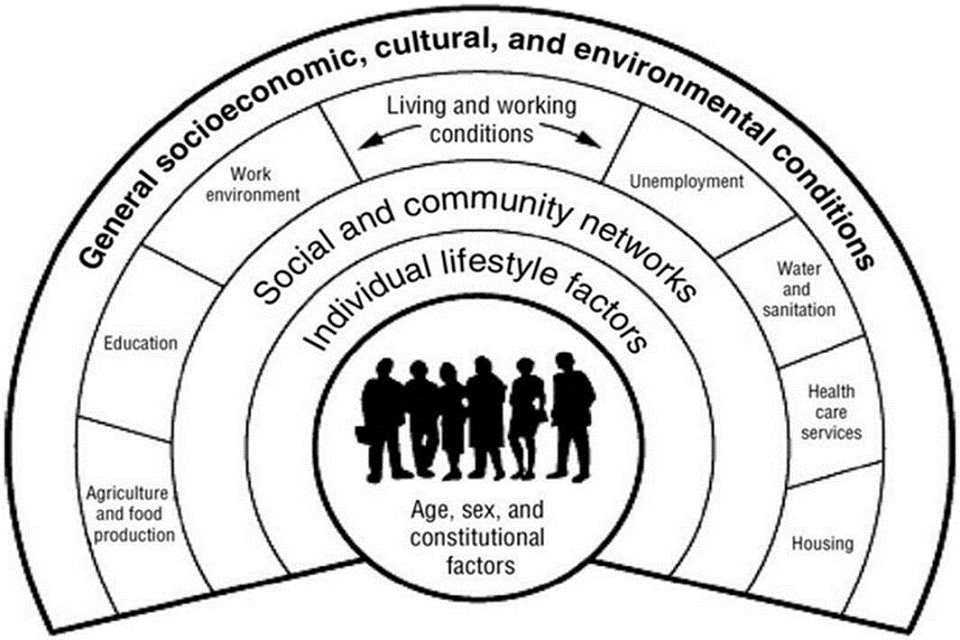
Source: GOV.UK

I come back to something I touched on in my last blog post, which is the social determinants of health.[v] Covid and its long- term effects disproportionately affect poor people and people of colour. And these groups of people are hugely unrepresented in yoga spaces. Why? – because those spaces are generally not accessible to them.  Yes, I know you may offer your classes free, or on a sliding scale, as I do. But  it’s not just about the money!  Yoga in the West is a fundamentally white, middle class pursuit. The doing ‘Yoga for’ [X condition] is an incredibly privileged thing to even begin to consider as part of our recovery process from Covid, or anything else.

Yoga probably isn’t that high up the list for most people recovering from Covid. Maybe it should be, who knows? But the necessary, seismic and fundamental release of yoga from the corporate forces of the pivot and the niche, from the incessant monetising of bloody everything that moves, is unlikely to happen any time soon. Tell me I am wrong.

And let’s not forget, that for many in this pandemic, just being alive is a privilege right now.


FOOTNOTES AND REFERENCES

[i] Shah, Waqaar, Toby Hillman, E Diane Playford, and Lyth Hishmeh. 2021. “Managing the Long-Term Effects of Covid-19: Summary of NICE, SIGN, and RCGP Rapid Guideline,” BMJ: n136 10.1136/bmj.n136>

[ii] Bajaj, Retesh, Hannah C. Sinclair, Kush Patel, Ben Low, Ana Pericao, and others. 2021. “Delayed-Onset Myocarditis Following COVID-19,” The Lancet Respiratory Medicine, 0.0 10.1016/S2213-2600(21)00085-0>

[iii] Vadukul, Prakash, Deepak S. Sharma, and Paul Vincent. 2020. “Massive Pulmonary Embolism Following Recovery from COVID-19 Infection: Inflammation, Thrombosis and the Role of Extended Thromboprophylaxis,” BMJ Case Reports CP, 13.9: e238168 10.1136/bcr-2020-238168>

[iv] Perry, Richard J., Craig J. Smith, Christine Roffe, Robert Simister, Saravanan Narayanamoorthi, and others. 2020. “Characteristics and Outcomes of COVID-19 Associated Stroke: A UK Multicentre Case-Control Study,” Journal of Neurology, Neurosurgery & Psychiatry 10.1136/jnnp-2020-324927>

[v] Paremoer, Lauren, Sulakshana Nandi, Hani Serag, and Fran Baum. 2021. “Covid-19 Pandemic and the Social Determinants of Health,” BMJ: n129 10.1136/bmj.n129>

‘All images, except for the social determinants of health, are from Pixabay.

Immune ‘Boosting’ Bullshit!

There have always been those in the yoga and ‘wellness’ communities who have distrusted science and ‘conventional’ medicine. However,  it does seem to be a growing – or at least more visible- trend, along with a distrust of experts of any kind, with many claiming that it is part of some global conspiracy (There may be a conspiracy – but that isn’t’ it!) Those of you who are, or who know, scientists involved in research know this, and find it laughable. Science is a good thing. The word ‘science’ comes from the Latin for knowledge. It is how we know things. 

Yoga cures old age (no, not really!)

There are many claims, like the one above, in the widely read yoga texts about the benefits of asana and pranayama practices on the various organs and systems of the body, and it is still common to hear yoga teachers repeating some of the more questionable claims as though they were facts.[i] However, it is specifically yoga’s effects on the immune system that  I want to talk about here. This was prompted recently, by Russell Brand (who is not a yoga teacher) sharing an ‘immune boosting’ Kundalini yoga breathing exercise on his Instagram page.[ii]

I have many issues with this, but the first and perhaps most important one is – can a yoga exercise ‘boost’ your immunity?

The short answer is no, because ‘boosting’ the immune system isn’t even a thing. The longer answer, is, our immune systems are way more complex and less easy to influence than that. That yoga, or diet or supplements (or any of the other things that people have to sell) can make for a better immune system misunderstands and misrepresents how the immune system (not really a system at all) actually functions. I link to some videos below for an excellent overview.

What is Yoga good for then?

There is really good evidence for yoga’s efficacy in reducing stress, and thus influencing the ways in the which the body negatively responds to stress, such as reduced immune function. So, whilst yoga can certainly play a role in helping to restore healthier immune function, to say that this means specific yoga postures or breathing exercises ‘boost’ the immune system is a stretch. To make such a claim is misleading and it’s unethical.  I link to a review of studies below, for evidence relating to yoga and immunity.

Influence

Perhaps more significant, is Brand’s influence. He has 2.2 million Instagram followers, and that particular post had over 173,000 views, with many positive comments. Such reach and influence carries power and responsibility.  He does say that he’s not a qualified Kundalini yoga teacher at the beginning of the video, but even if he was, the health claims are spurious. Does he know what he actually means when he tells people that the practice will ‘boost’ their immunity? Really?

Immunity-shaming?*

Furthermore, this ‘immunity-shaming’ dog-whistles a much more insidious and inherently ableist narrative that has additional classist and racist undertones. Since the beginning of the Coronavirus pandemic, there has been a constant, unrelenting rhetoric amongst ‘wellness’ professionals about Covid-19 and immunity. The suggestion (and in many cases outright claim) being that ‘healthy’ individuals with a robust immune system don’t have anything to worry about. Added to this, is the oft repeated ‘existing medical conditions’ qualifier, presumably used to reassure the rest of us that – don’t worry-  it’s only sick, old and disabled people that are dying.

What do people actually mean when they say that it’s only people with ‘underlying health conditions’ who are dying from Covid? That these people are expendable? That they are somehow responsible for, and therefore deserving of, their fate? Even if they could try and justify that attitude for – say –smokers (which, by the way, they can’t) what about those  people classed as ‘clinically extremely vulnerable’ who have conditions that have absolutely nothing to do with their lifestyles? [iii]

Many people live with health conditions and disabilities, or receive medical treatments which mean that their immune function is  inherently compromised. I have a relative, for example, who doesn’t have a spleen because it was surgically removed.[iv] I also work with people whose immunity is compromised because they are going through cancer treatment.

That serious health inequalities exist amongst those with low incomes, precarious housing, and among people of colour, makes the whole ‘let’s do yoga to boost our immune system’ conversation even more distasteful. It promotes ideas of health and wellbeing that are – like the privilege of eschewing essential vaccination – blinkered, unscientific and, frankly, harmful.  


Footnotes

[i] The Yoga classic BKS Iyengar’s ‘Light on Yoga’ is full of such claims.

[ii] https://www.instagram.com/tv/CKUd8DRjEB3/?utm_source=ig_web_copy_link

[iii] https://www.nhs.uk/conditions/coronavirus-covid-19/people-at-higher-risk/whos-at-higher-risk-from-coronavirus/#:~:text=People%20at%20moderate%20risk%20(,(such%20as%20hepatitis)

[iv] [iv] The spleen has a significant role in immune function, removal can lead to compromised immunity https://www.nhs.uk/conditions/spleen-problems-and-spleen-removal

*’Immunity Shaming’ term stolen from Matthew Remski, of the excellent Conspirituality Podcast. I encourage you to listen.

Resources

The Immune System

My favourite A&P resource Crash Course present no-nonsense, factual, well researched and entertaining videos. Below, two on the immune system for an excellent overview. Worth noting is the difference between innate and adaptive immunity.

Yoga and immunity

Yoga and immune system functioning: a systematic review of randomized controlled trials

“Immune Boosting” in the time of COVID: selling immunity on Instagram

I am linking here to an excellent course by my colleague Charlotte Watts which explores a good solid evidence-based approach to yoga, the nervous system, and immunity https://www.yogacampus.com/courses/specialist-training-courses/teaching-yoga-for-immune-and-respiratory-health

Health Inequalities

Health inequalities: the hidden cost of COVID-19 in NHS hospital trusts?

https://www.health.org.uk/topics/inequalities

https://www.kingsfund.org.uk/publications/what-are-health-inequalities

Covid-19 Vaccination

https://www.nhs.uk/conditions/coronavirus-covid-19/coronavirus-vaccination/coronavirus-vaccine

https://www.england.nhs.uk/coronavirus/covid-19-vaccination-programme/key-vaccination-information

Themes Biblical, Compassion and Zero Tolerance

I am lying, awake, irritated by the sound of the neighbour’s central heating exhaust and worrisome thoughts about the ‘biosecurity’ of our ducks’ pen. (As if things weren’t bad enough, Avian Flu is on the march as well) I have been reading a book for my Theology course which tackles the morally ‘problematic’ texts of the Old Testament, the bits that seemingly advocate violence, rape, slavery, homophobia, genocide… One suggestion, and I suppose an accepted understanding, is that things are better than then. That we have somehow evolved to be more morally mature.

I am not so sure.

It’s not just central heating and ducks that are keeping me awake. The escalating rise of Covid infections; the health service (that I work for) on the brink of overwhelm; an attempted fascist coup in the United States; the many unfolding ramifications of the shit show that is Brexit, as well as all the other global atrocities, such as the ongoing crisis in Yemen. Plague, war, division, exile, genocide: these themes are – quite literally – Biblical. Not to mention misogyny, homophobia and racism, it’s all still there. Human beings have never really stopped inciting or exacerbating this crap.

Of course, it wasn’t God doing all those things in the Old Testament, it was human beings! God was the justification, or at least the way in which they made sense of it all. And it is human beings who continue to behave the most jaw-droppingly appalling ways. Sadly God is – for many of them – still the justification.

If God was the kind of God they seem to think God is (and I don’t believe in that God) I think God would be rather pissed off.

Violence done in the name of God is a common atheistic argument against religion. And I see the point. Except for all the ways in which religious people (many more than those who commit violence) promote peace, love and unity in the name or practice of their faith. Human beings also behave appallingly in the name of other things that are not religion. Violence is about people. As we are seeing in the USA at the moment, God has been invoked in ways that many people of faith find deeply disturbing and offensive. And it’s not OK.

I said today on a social media post that neutrality is no longer an option. I was talking about the unspoken but generally accepted rule that religious leaders should stay away from the subject of politics. Particularly those who preach. This is in the week following an insurrection in which people were visibly and prominently wearing and carrying emblems and insignia that glorify white supremacy, antisemitism and genocide. That isn’t politics, it’s immorality. And if there’s one thing that religious leaders are qualified to comment on, it’s morality. I have been heartened to see many taking a stand on this. Calling for more than unity, namely: action; accountability; and zero tolerance of the kind of bigotry and hatred that history has taught us does not end well for anyone.

In truth, the Bible has many more passages in its entirety that promote the themes of liberation and social justice, as well as love, hope, faith and unity, than the other more troublesome parts. Taken as a whole, it gives a lot of hope for humanity. Love and compassion are the overriding themes of most faiths, because, despite our worst behaviours, love and compassion are also the overriding instincts of human beings for one another. Hope is possible because we know this is what we are capable of, and what most of us actually want and value.

Love, Compassion, Unity, Hope. Yes, but does this mean tolerating fascists? Most definitely not.

“Our lives begin to end the day we become silent about things that matter.”

Dr. Martin Luther King Jnr.

The Magi and the ‘bad’ year

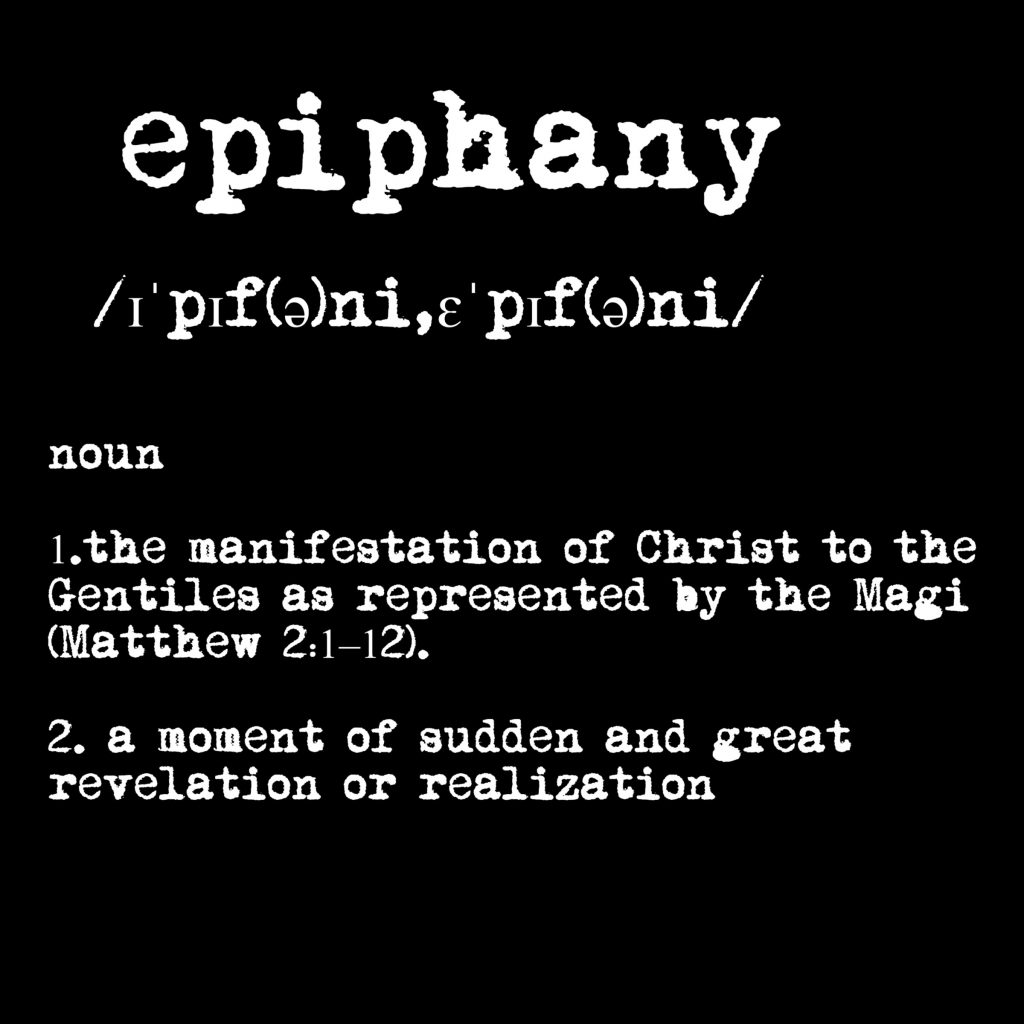
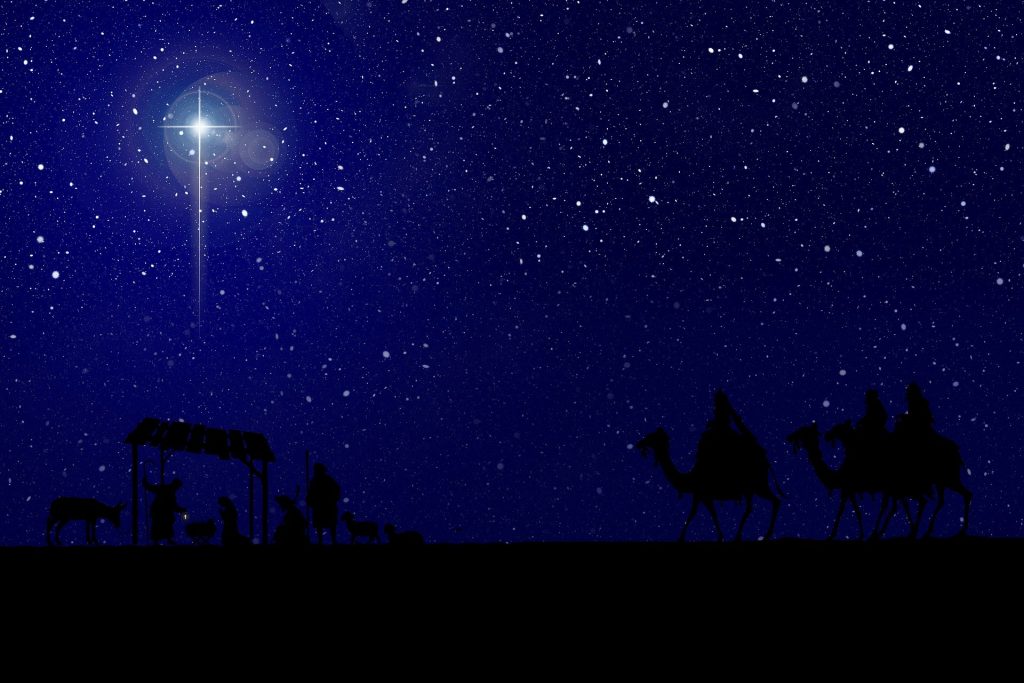
Today is Epiphany, The date when Christians in the Western Church celebrate the arrival of the Magi, and with them the manifestation and revelation of The Christ – the Light of the World – to the whole world. Who doesn’t know and love that story of ‘wise men’ and their gifts of Gold, Frankincense and Myrrh?

It is also a New Year, and a time for reflection. Although there are other transitional times throughout the year that lead us to reflect on what has happened, New Year feels, for reasons of new calendars and psychological blank slates, more significant. It is especially true this year, following the year that will forever (or for a long time at least) be synonymous with the lockdown. It was, in many minds, a ‘bad year.’

And yet, three days into 2021, not much has changed. In terms of the Covid situation, it is actually much worse. Does that mean 2021 is a ‘bad’ year too? When it’s only January 3rd? Or does more of it have to be bad? A relatively arbitrary historical imposition of a twelve-month pattern aligns with a strange notion that moving from one day to the next will somehow make things different, better. Why is a year deemed good or bad depending on specific events that have happened during the past twelve months?

Of course, this is mostly subjective. Individual experiences in any given year are all very different. There are other calendars – Chinese, Hebrew, Islamic, Ethiopian, Persian – which have different ‘New Years’. Not only that, ‘bad’ things happen to people all the time, all year round. All sorts of terrible individual, social and geographical traumas. There are people in war zones, in refugee camps, in situations of domestic violence. The difference I suppose, is that Covid is happening to all of us. And in the year where a bad thing happened to all of us, it is tempting to think that 2020 was the culprit. In reality, it was the Covid that was bad, not the year.

As a child, I remember adult family members toasting New Year with a unanimous agreement that the current year had been tragic/depressing/full of disaster/maligned with bad luck and that they hoped the coming year would be better than the last one. I found it strange and troubling, thinking of all the other – good or just neutral – things that had happened and wondering why it was the bad thing that had made the year what it was.

I have since discovered that this is what human beings do. We have the cerebral wiring that anchors negative events – an ancient survival mechanism. We are more likely to recall and focus on the bad stuff, therefore, and rather forget that there were also many moments of happiness. There are good evolutionary reasons for this, but whilst we have rather moved on from the need to avoid that place where the sabre-toothed cat ate our uncle, our brains still work that way. Our desire to make sense of this creates patterns, meanings, stories. ‘It has been a bad year’ and not, ‘some things happened and some other things happened, some were good, some were bad, some were neutral,’ creates a meaning-full narrative. If bad things are the things that defined the period, then a new period gives us hope that things will be better ‘this year’ or ‘next week’ or ‘tomorrow’.

Hope is a deeply human and necessary thing. In the darkness, we choose to see light. Indeed, it is in the darkness perhaps that the light is more visible. Hope is a particular feature of faith, but those without faith see it and desire it too. As a chaplain it is a question I ask often, and maybe moreso of people who don’t have any religious beliefs: What gives you hope? Maybe this is one reason the story of the Magi is so compelling, even for non-Christians. A bunch (maybe three, maybe many more) of astrologers, ‘foreigners’ from ‘The East’ choosing to follow a strange bright new star towards an unknown goal, and finding in that very lowly place, the Light of the World? It’s probably the best metaphor for the unversality of hope that I can think of!

We look forward to a ‘better’ 2021, even though we don’t know what will happen, except that it might be good. And some of it will be. There will most definitely be moments of darkness, of uncertainty, of loss. The reality is that the challenges of Covid, of climate change, of war and natural disaster, of political upheaval, and all the private and personal traumas are not suddenly going to go away. But there will also be joy, wonder, laughter, love, hope. All of it is real, and all of it is what it means to be human and to be alive.

The Magi didn’t know where they were going, but they went anyway. Because the beckoning light of Hope was too much, too big, too important to ignore, or to simply watch from afar.

With the brightest of blessings of love and hope for this year and all years.

Jude x

‘Twas The Night Before Christmas (or Love is All Around)

It’s nearly 3 am on Christmas Eve, and for reasons known only to my hormones and neurology, I am wide awake and listening to the sound of decidedly un-Christmassy wind and rain, and scuffling rodents under the floor. The whole ‘not a creature is stirring…’ thing is not a thing in this house. We live in the countryside – in a situation that could be described as glorified camping – and rodents are ubiquitous. My mother couldn’t stay here for more than five minutes without booking herself into a Travelodge. My mother need not worry about rodents under my floor; she is 434 miles away, we’re all on lockdown, and, anyway, I am working. I need to get up in three hours, except I am already up.

A ‘frontline worker.’ I feel like a fraud. My NHS badge says otherwise, I suppose. But I am not saving lives. One might argue I am saving souls, but I don’t save anyone (or at least I am not the one doing the saving) I hold hands, stroke foreheads, speak quiet prayers, give gentle assurances, witness tears. Lots of tears. Mostly, I sit and breathe. A presence. Bearing witness to… human frailty, and human strength. The power of the body and the will to sustain that most miraculous of intangibles – the life-force. And oh, it is such a privilege, to be at this most intimate transition. Often when loved ones can’t be there. Often when they have just stepped out of the room for their first coffee in seven hours. Often when there is nobody.

And of course at Christmas, and especially this locked-down Christmas, it seems more poignant. Loved ones separated by gowns and masks and gloves, by care-home windows. Or by geography, as I am from mine. Our family Christmas will be via Zoom, as it will be for many. And my mind turns – as minds do at Christmas – to friends and loved ones I haven’t seen, whom I miss, even if we haven’t spoken for a while, for months. Maybe years…is it really that long? All the other humans I could have reached out to, and didn’t. All the conversations I would like to have. All the warm bodies I would like to hug. And I think of those I didn’t get a chance to see again.

It is all lapping around in my sensitive – wee hours of Christmas Eve morning – heart. A warm, amniotic sea… of Love. This is what cannot separate us. It is utterly tangible to me; here, at my kitchen table at 3 am, at those precious moments of dying, at the times of rawness and transition when I am perhaps most sensitive and attuned. And at all the other times too. It connects us all. Even – and perhaps especially – when we feel at our most separate.

So, I suppose this is the message I would send to all of you. I love you. You are loved. Have a blessed Christmas.